Call me Daisy
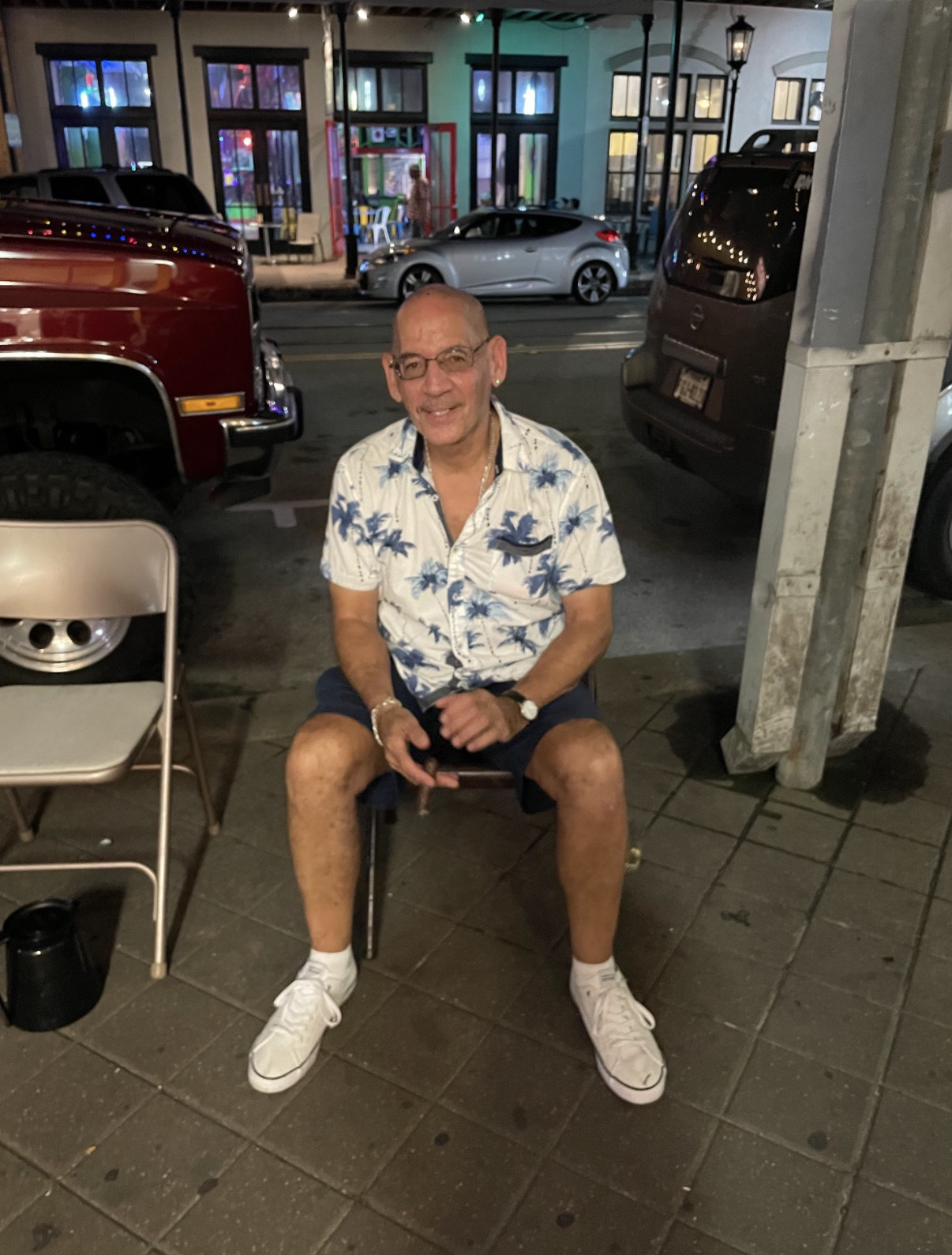

She told me not to use her real name.
So I asked her to choose one.
“Daisy,” she said.
And Daisy is what I’ll call her.
I hadn’t planned on hearing her story that evening on The Strand. In fact, she didn’t seem sure she wanted to tell it. There was hesitation in her voice, the kind that comes when somebody has lived enough life to know that once certain words leave your mouth, you can’t put them back.
“I can’t,” she kept saying.
Then she paused.
“I got too much story.”
She was right.
Daisy has been a high school teacher. She majored in English. She worked for a newspaper in Beaumont and remembers loving newspaper work — “everything about it,” she told me. At another point in her life, she worked for a county judge.
And then there was crack cocaine.
That one sentence seems almost too abrupt, but listening to Daisy, I realized that was part of what made her story so powerful. Lives don’t always unfold in neat chapters. Sometimes the distance between the person you were and the person you become is frighteningly short.
Daisy told me crack took everything.
“Everything I had,” she said.
The teacher, the English major, the newspaper employee, the woman who once worked around government and public officials found herself living a life she probably never imagined for herself.
Eventually, she began selling sex.
She told me she was making as much as $400 an hour. She had entered a world where clients were vetted and references mattered. It was organized. There were rules. There was money.
And there were drugs.
It would be easy to stop the story there and turn Daisy into a cautionary tale about addiction. But that would miss the most important thing she told me.
Because somewhere in the middle of all of that, Daisy recognized something terrifying: she had found someone willing to finance her destruction.
She met a wealthy man who treated her well. He gave her money. He paid for what she wanted. And that included crack.
“He was paying for my crack habit,” she told me.
There was no dramatic villain in the way she described him. In fact, she called him nice.
That may have made the situation even more dangerous.
As long as the money kept coming, Daisy realized, the drugs could keep coming too.
“He was going to keep paying for it,” she said.
So Daisy did something that struck me as one of the most remarkable parts of her story.
She walked away.
Not because the money dried up.
Not because someone forced her to.
Not because she suddenly had nowhere else to turn.
She walked away because she understood where staying could take her.
She stopped talking to him for four months and left town, going to DeQuincy, Louisiana.
Think about that for a moment.
Addiction had already cost her so much. Then she found herself with someone willing and able to keep supplying the money that could feed it indefinitely.
And somehow, somewhere inside herself, Daisy found enough clarity to recognize that what looked like security could eventually kill her.
Listening to her, I kept thinking about the labels we put on people.
Teacher.
English major.
Newspaper worker.
Government employee.
Addict.
Sex worker.
Survivor.
Which one is Daisy?
All of them.
And none of them tells the whole story.
That may be why she initially struggled to speak. When you’ve lived a life with that many turns, where do you even begin?
“I got too much story.”
Those words stayed with me.
Daisy didn’t tell me everything.
She wasn’t ready for that.
Maybe she never will be.
And she doesn’t owe us the rest.
What she gave me was a slice of her life — raw, complicated and deeply human.
I don’t know Daisy’s entire story.
I only know what she trusted me enough to share.
But I know this:
A life can unravel.
A person can lose almost everything.
The road between respectability and desperation can be much shorter than most of us want to believe.
And sometimes salvation doesn’t arrive with flashing lights, a perfect ending or somebody coming to rescue you.
Sometimes it begins quietly, with a person recognizing the danger in front of them and deciding:
I have to leave.
Daisy asked me not to tell you her real name.
But she wanted me to tell you this much of her story.
And maybe, for now, that’s enough.
Support Independent Local Journalism
Humans of Galveston is independent community storytelling powered by readers like you. If you value these stories, please consider supporting our work through the Donate tab on the homepage.


Great read, Bobby. I hope "Daisy" is doing well now. History can build up inside a person (good or bad) and create an emotional pressure. You may have given her some relief by listening to her story.